

For over two centuries, Konya in Asia Minor stood as the capital of the Sultanate of Rum – a Seljuk state with a refined and cosmopolitan culture. Though the Seljuks have faded into history, their enduring legacy is evident in several impressive monuments across the historic core of Konya.
Before the rise of the Ottomans, most of Asia Minor was under the control of the Rum Seljuks. They were one of several Turkic tribes that broke away from the Great Seljuk Empire in the late 11th century. The term “Rum” originates from the Arabic word for Romans because this sultanate was established on lands previously held by the Eastern Roman Empire.
The Sultanate of Rum, with Konya as its capital, thrived in the late 12th century. Its borders expanded as more Anatolian principalities fell into its lap. Economically and culturally, the Seljuks forged strong ties with Central Asia, Persia, Venice, Genoa, and even their former enemies, the Byzantines. This period also saw an ambitious building campaign, resulting in the construction of numerous mosques, madrasas, and caravanserais throughout Asia Minor.
A Seljuk state with a cosmopolitan culture.
However, the world of the Seljuks collapsed in 1243 when the powerful Mongols launched devastating invasions. The sultanate quickly became a vassal state of the Mongol Empire, and Konya turned into a ghost of itself with all influences stripped. Eventually, the sultanate disintegrated into a series of independent principalities, among them that of the Ottomans. Despite its relatively short span of some 210 years, the Seljuks have left behind an enduring legacy visible across Konya’s urban landscape.


1. Alâeddin Mosque
Named after Sultan Alaaddin Keykubad I (1219 – 1237), the hilltop Alâeddin Mosque is the largest among several Seljuk architectures to survive in Konya. It was part of a citadel complex completed in 1220, featuring a spacious prayer hall and a courtyard encircled by stone walls. The hall is distinctive as it incorporates Islamic and Christian elements, most notably the Byzantine columns and capitals. That likely reflects the policy of religious harmony promoted by the Seljuk ruler.
The stone-paved courtyard contains two octagonal mausoleums, which are Alâeddin Mosque’s most striking features. One mausoleum, adorned with a greyish-blue-tiled conical roof, is the resting place of generations of Seljuk sultans. Its design combines elements of Gothic architecture with the kurgan – a type of tumulus traditionally used in the Eurasian steppe. The other, made of marble, was believed to have been constructed for Alaaddin’s predecessor and brother. Its vacancy is shrouded in mystery, with local lore suggesting an unresolved feud between the two sultans.


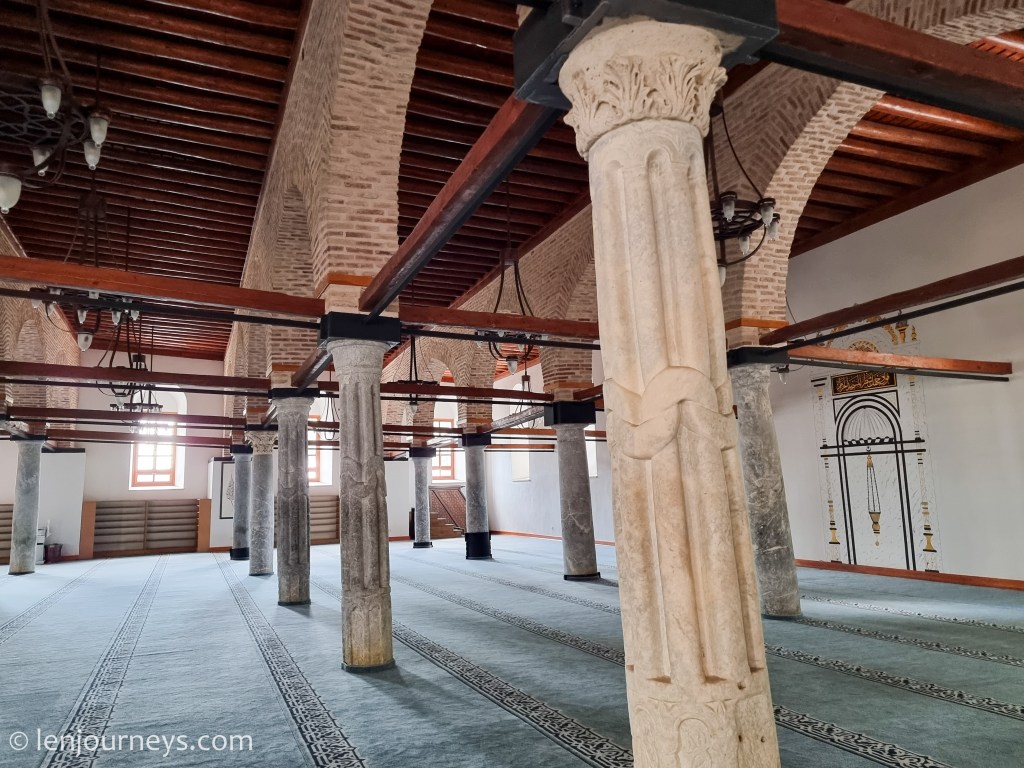


2. The Madrasas
Down the hill, Koyna’s best-preserved madrasas – the Karatay Madrasa and the Ince Minaret Madrasa, showcase the remarkable craftsmanship of the Rum Seljuks. Though now open to the public as museums, they were among the earliest Islamic schools in Antolia. Each madrasa features a domed courtyard surrounded by four study halls. The dome is exquisite, topped with an oculus, and adorned with glazed tiles in turquoise, brown, and dark blue. These tiles are arranged in endless geometric motifs, making the ceiling look like the finest Turkish rug.
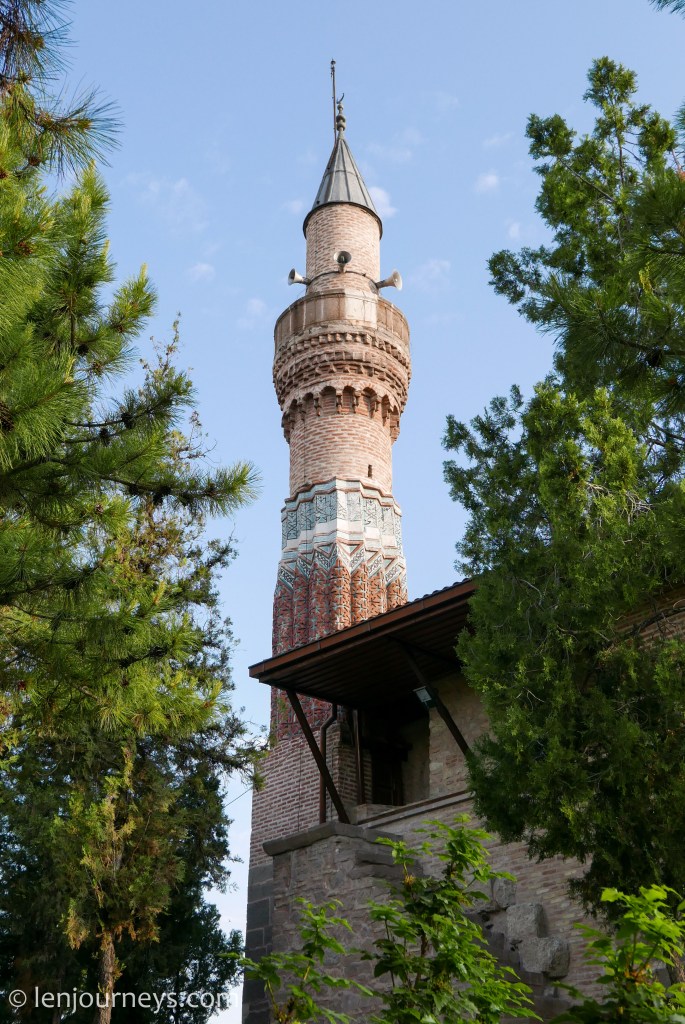
Despite many similarities, the two madrasas have distinct differences. Firstly, the entrance of Karatay Madrasa features a muqarnas hood embellished with Arabic inscriptions and alternating strips of grey and white stoneworks called ablaq. Meanwhile, the Ince Minaret Madresa boasts two graceful stone banners of Arabic calligraphy intertwined and separated just above the doorway. It exudes a symmetric beauty that seems mystical. This madrasa also distinguishes itself with a slender brick minaret decorated with turquoise and black patterns.
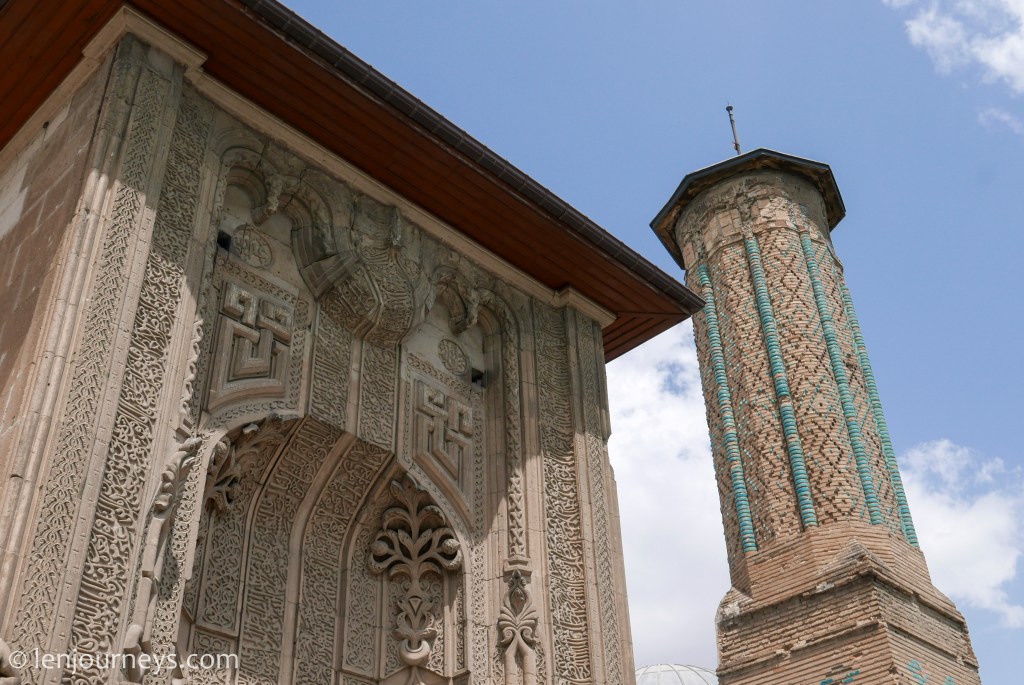
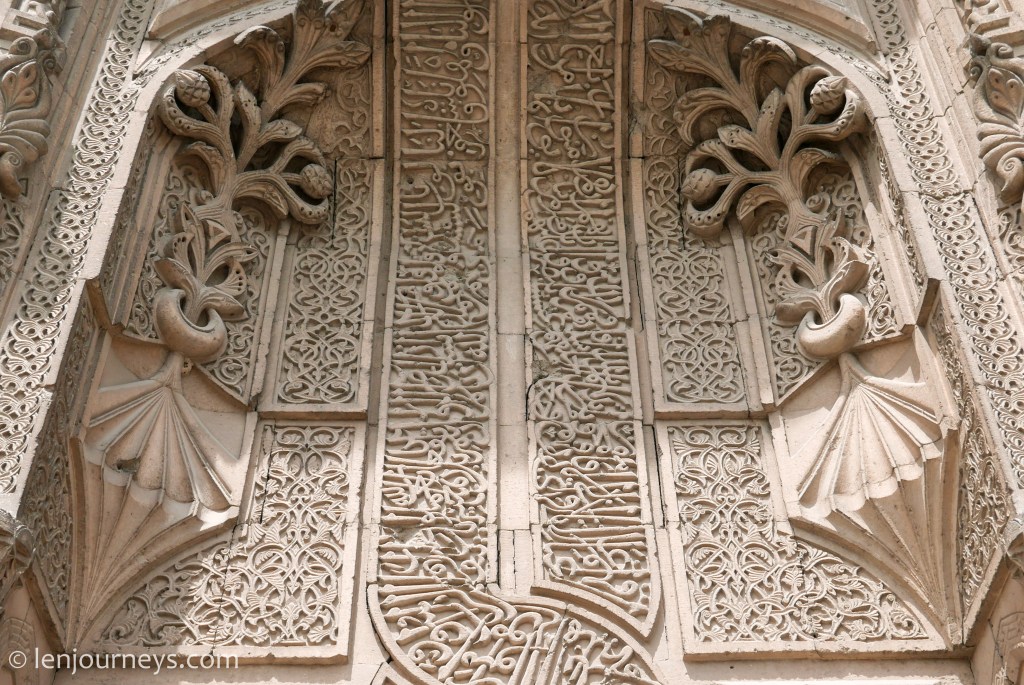
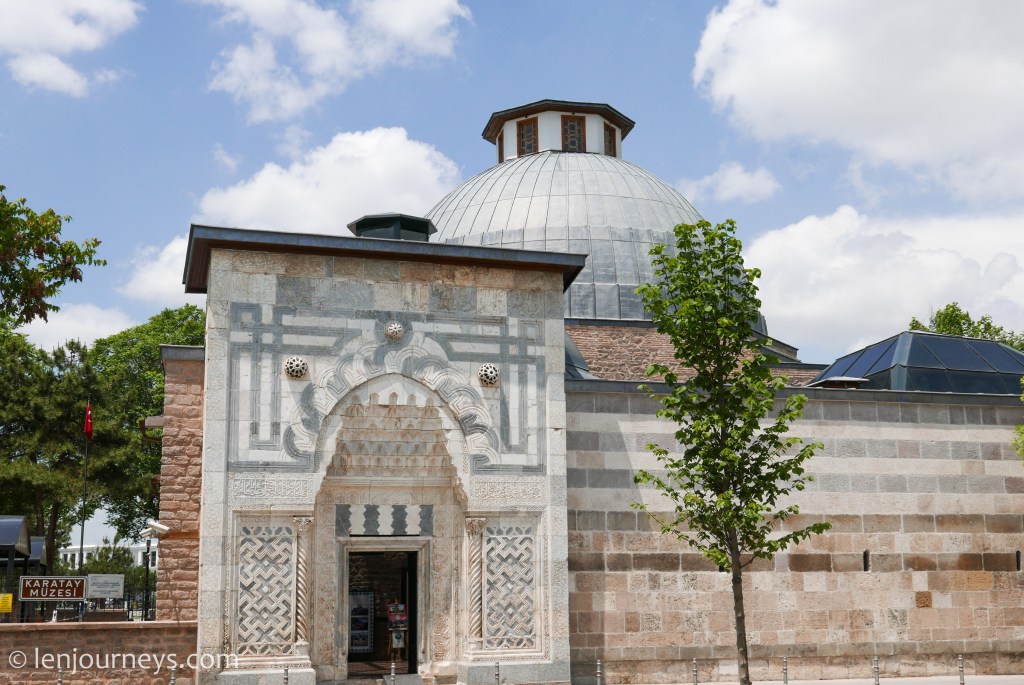
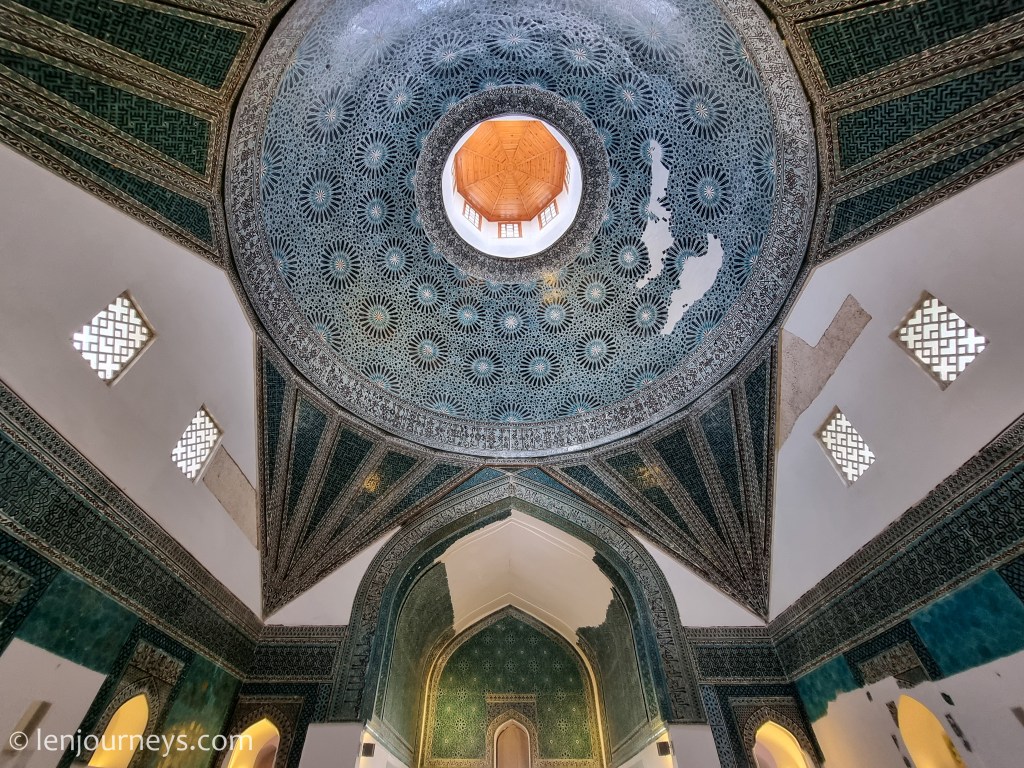


Tips: Of the two madrassas, only the Karatay Madrasa is currently open. Also known as the Tile Works Museum, it exhibits excellent tileworks and masonry from both the Seljuk and Ottoman periods.
3. Sâhib Ata Mosque
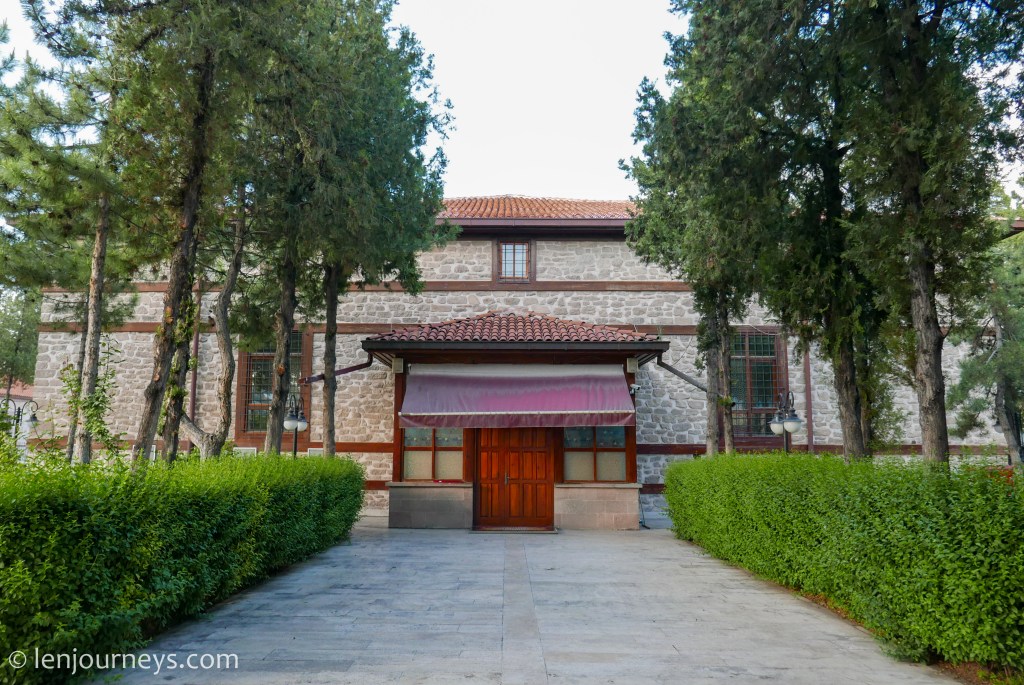
Located within a short distance from Konya’s central hill, the Sâhib Ata Mosque is another splendid example of Seljuk architecture. It’s part of a religious complex built in 1258 for Sâhib Ata, the vizier of the Sultanate of Rum, who rose to prominence during the last phase of the Seljuk dynasty. The construction took nearly three decades and included a mosque, a mausoleum, a dervish lodge, and a hamman.
However, the original mosque was destroyed by fire. What remains today is a reconstruction from the Ottoman period, featuring a timber-framed prayer hall supported by wooden beams and columns. The only remnants of the Seljuk era are the ornate mihrab and the elaborate entrance adorned with stalactite muqarnas, Arabic calligraphy, and geometric patterns of turquoise tiles.


4. Sultan Han
Within 200-odd years, a network of over a hundred caravanserais was established along the trade routes spanning Anatolia. They were built at intervals of about 30 km, which is equal to the distance a caravan could cover in a single day. Beyond offering refuge and sustenance, these roadside inns bring medical care and religious services to ensure the well-being of travelers. Many caravanserais also facilitated the exchange of goods, information, and culture.
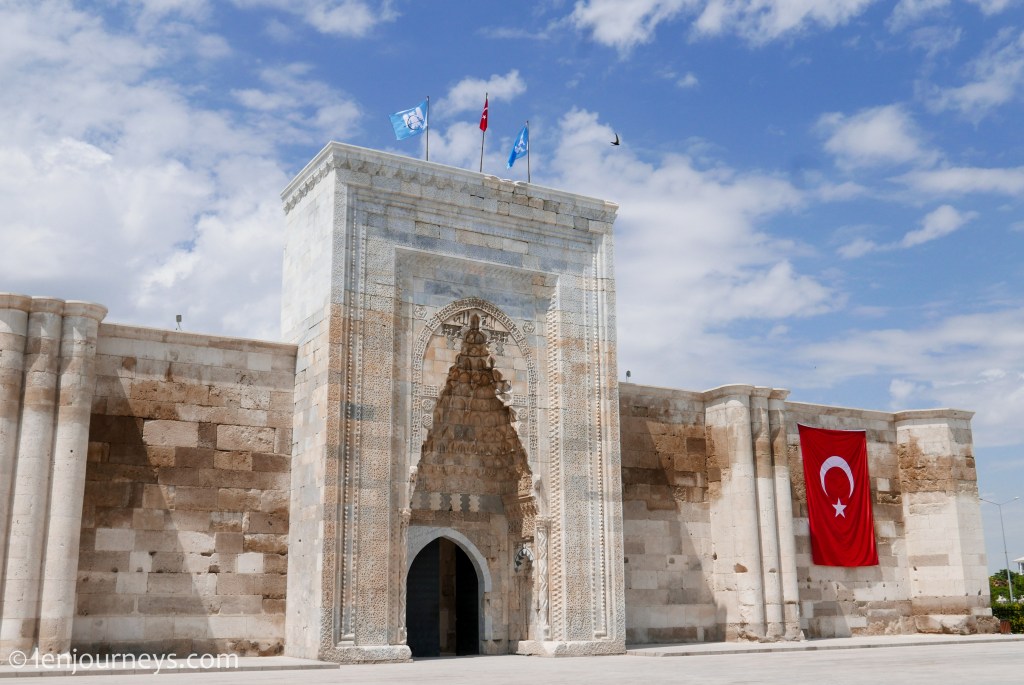
Though caravanserai was developed long before the Sultanate of Rum, the scale, design, and hospitality provided by Seljuk institutions were unprecedented. And there is no better place to experience this than Sultan Han – Turkey’s largest and best-preserved caravanserai – between Konya and Cappadocia. Constructed under the reign of Sultan Alaaddin Keykubad I, it’s a masterpiece in stone, comprising structures noteworthy for its elegance and artistic mastery.
In the past, weary travelers with large and heavily laden caravans would enter Sultan Han through the grand, muqarnas-adorned portal. They would then delight in an expansive arcaded courtyard featuring kitchens, bathhouses, and a free-standing kiosk mosque. Across the courtyard is a richly decorated portal that opens to an enclosed lodging hall. Its design provides comfort and respite, with thoughtful elements such as barrel-vaulted ceilings and an oculus for natural light and fresh air.
Turkey’s largest and best-preserved caravanserai.
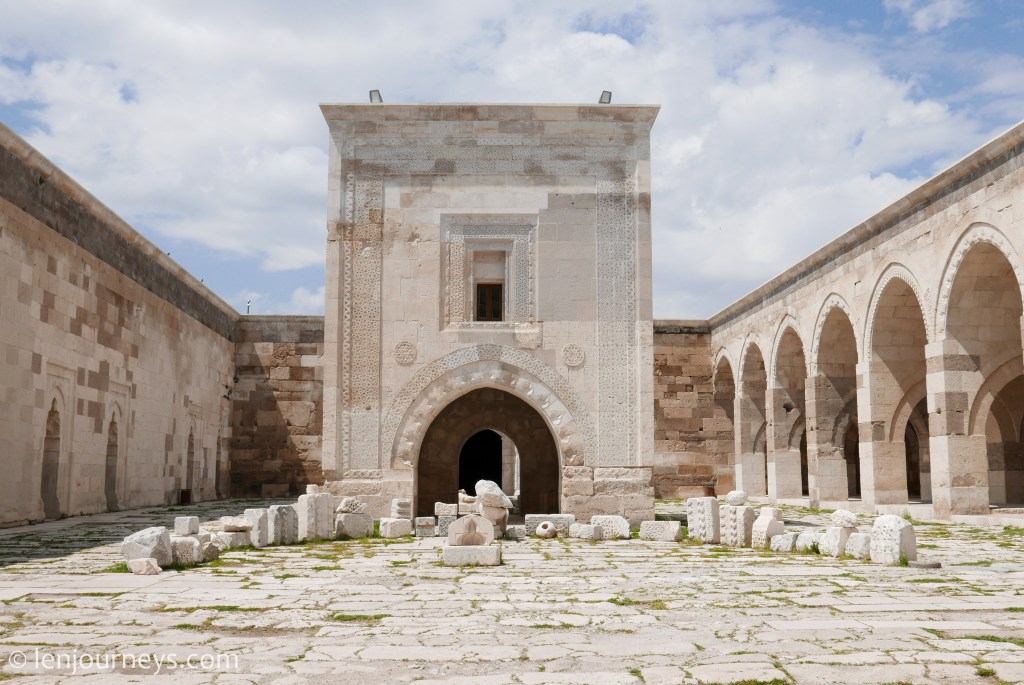


Tips: Sultan Han is located near Aksaray, halfway between Konya and the sites of Cappadocia. The best way to get there is with a personal vehicle. Some buses do stop here, but very briefly.
5. Mevlana Museum
But the Seljuk rulers were more than great builders. They are patrons of arts and revolutionary thinkers who turned Asia Minor, particularly Konya, into a cultural hub, attracting artists and scholars from across the Islamic world. Among them was Jalāl al-Dīn Muḥammad Rūmī (1207-1273), a celebrated 13th-century poet, theologian, and Sufi mystic, whose followers founded the mystical whirling dervishes, also known as the Mevlevi Order.
Originating from Balkh, Rūmī’s family came to Konya upon the invitation of Sultan Alaaddin Keykubad I. The sultan even bestowed his family an imperial rose garden that eventually became the site of Rūmī’s remarkable mausoleum. Rūmī, named after the sultanate, spent most of his life in the Seljuk capital and produced some of the greatest poems in Persian literature, including the Masnavi. Even today, his fame and influence transcend borders, reaching as far as Central Asia and the Indian subcontinent.
As Rūmī passed away in 1273, people buried him in the same rose garden as his father. But soon, a mausoleum was constructed over the grave of this grandmaster. It features a pen-shaped dome of 16 sections covered in fine turquoise tiles. This turquoise dome – an icon of Konya – rises from the complex that once served as the lodge for the Mevlevi Order during the Seljuk period. Unfortunately, the structure was still under maintenance during my visit.
Beneath this unmistakable turquoise dome is the sarcophagus of Rūmī – a paragon of Seljuk wood carving from the 12th century. Draping over it was a brocade embroidered in gold with verses from the Quran – a gift from an Ottoman sultan at the end of the 19th century. The Ottomans also preserved the burial chamber with the utmost care, adorning it with calligraphy and stylized floral motif paintings. Next to Rūmī’s sarcophagus stand several others belonging to his father, son, and prominent members of the Mevlevi Order.
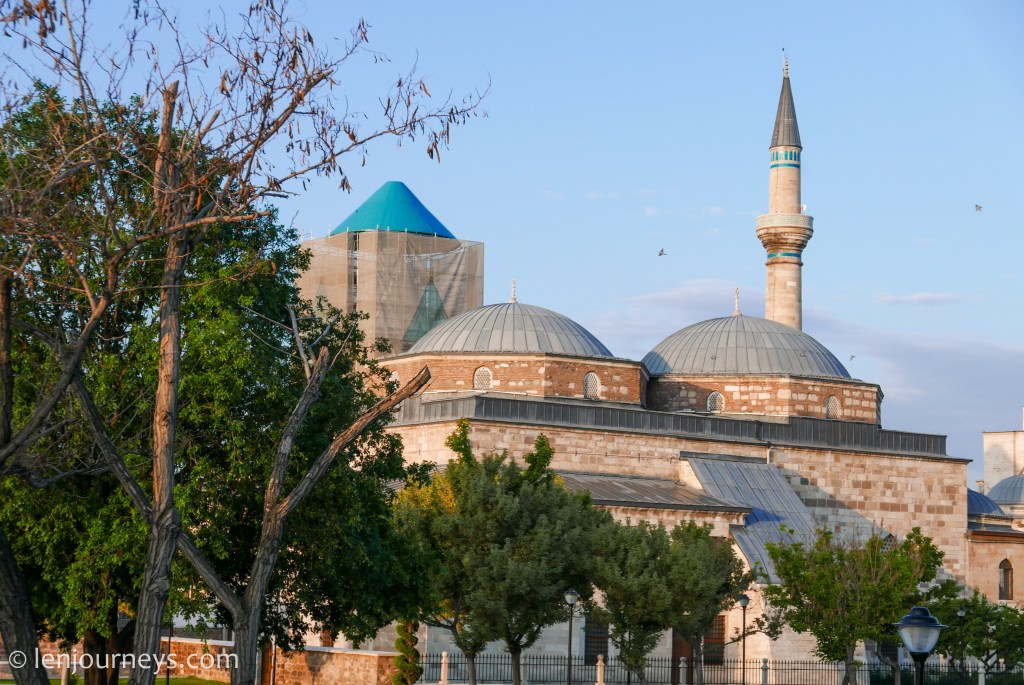
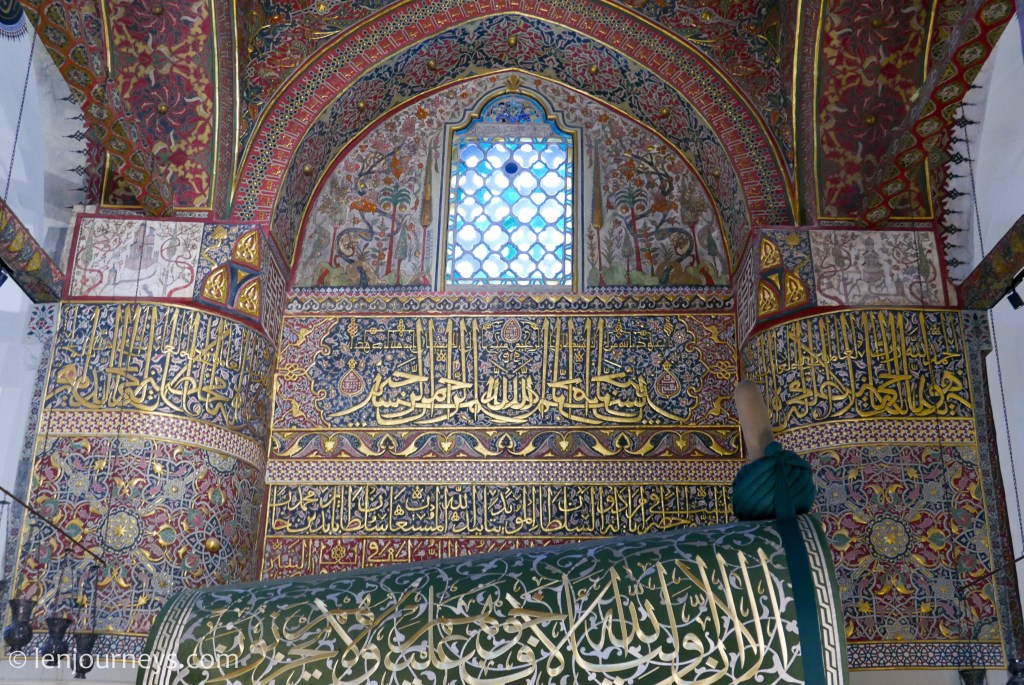
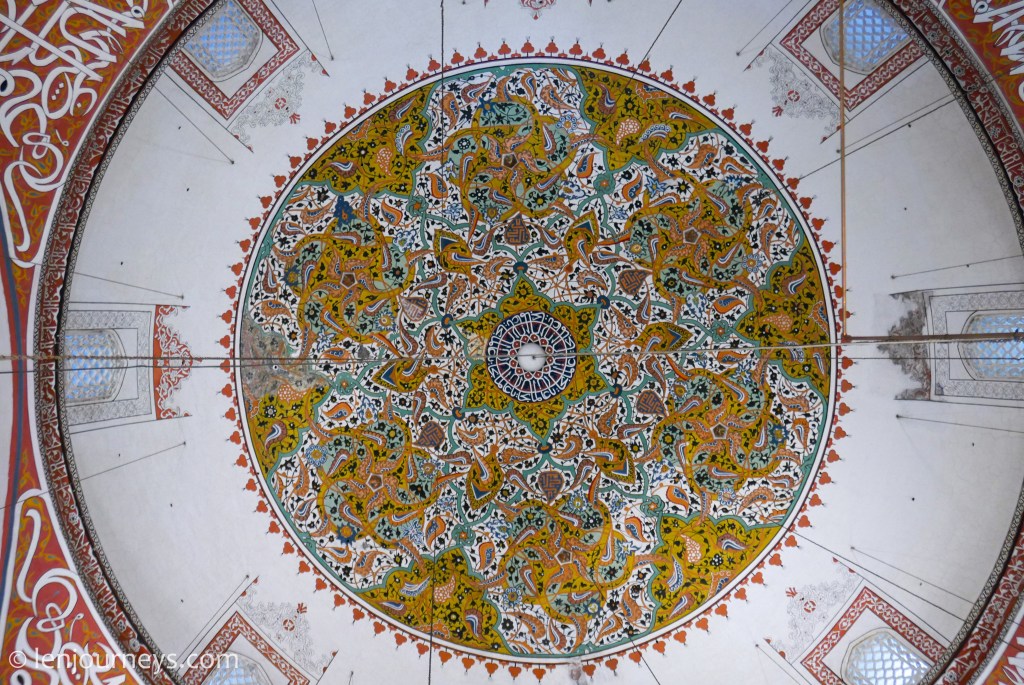


Tips: Entry to the Mevlana Museum is free, yet be prepared for a security check upon arrival. To see the mesmerizing whirling dervish performances, schedule your visit for the weekend when these spiritual sessions take place every Saturday at the pyramid-like Mevlana Cultural Center, just about a kilometer away from the museum. Unlike the commercial shows in cities like Istanbul, these performances offer a genuinely spiritual experience.
Ottoman Influences
Though Konya witnessed its Golden Age during the Seljuk period, the city did quite well under Ottoman rule. Its mining and textile industries flourished, producing exquisite carpets and rugs highly prized in export markets. Politically, Konya maintained its importance as a provincial capital, with a sehzade (prince) as the governor. The Ottomans also left their marks on the city through splendid architecture, including the covered bazaar and two grand mosque: the Selimye and Aziziye.
Constructed in the late 16th century, the Selimye Mosque embodies all the features of a classical Ottoman mosque: it is built using cut stone, has a spacious prayer area under a large dome, porticoes topped by smaller domes, and is adorned with two minarets. Meanwhile, the 18th-century Aziziye Mosque skillfully blends Baroque ornamental style with imperial Ottoman architecture, resulting in a strikingly eclectic structure that sets it apart from the traditional houses of the bazaar.


Tips for visiting Konya
- Konya is easily accessible by high-speed train from Istanbul (5 hours) and Ankara (less than 2 hours). Tickets are purchasable on the official website of Turkish State Railways.
- Please note that in Istanbul, the train stations, either Söğütlüçeşme or Pendik, are located on the Asian side of the city. The surrounding area of the first one is under construction. Therefore, taking the metro, also known as Mamaray, to this station would be more convenient.


Konya was one of our favourite cities in Turkey. The Seljuk architecture is so delicate and beautiful. And it was a good place to learn more about the Dervishes. Great post Len, Maggie
Unfortunately, I couldn’t see the Sufi whirling. There is little information about where and when it occurs. And the tourist information office was no help. It was closed the whole time I was there 🙂
Oh no! I found one blog that talked about the free Rose Garden performance and we went with it. Luckily it was correct.
Cool! It seems blogs are still a reliable source of information 😀 Google was not helpful in this case. I hardly found any “official” statement about the performances. Generally, I found tourist information in Turkey is scarce or out-of-date. Many sights are closed/maintained, yet still listed as “opening”.
We found that a lot too.
I remember reading about the Mevlana Museum on Maggie’s blog and being in awe of its exquisite interior. There’s something fascinating about Seljuk architecture, like the stone banners at the Ince Minaret Madrasa. The calligraphy carved onto them look so refined. It’s sad to think that this form of art is becoming less and less common today.
Sadly true. Restoration in the future will be difficult because there are few people know how to do it. The caligraphy was complex yet so elegant.
Wonderful post Len. We very much enjoyed our visit to Konya some years back, and were lucky enough to see an authentic indoor “performance” of the sacred ritual of the dervishes. It was truly moving. We’ve long been fans of Rumi’s poetry, but I had forgotten that the name Rumi actually comes from the Roman Empire.
Alison
Same here 🙂 I know Rumi was his pen name but I didn’t expect it was derived from the kingdom’s name. The ritual must be a unique experience! Was it like being hypnotized or anything like that?
I suppose it was a bit like being hypnotized. It was very meditative, and filled me with a great sense of peace and presence. It was a beautiful experience.
Alison